Consumer platform
HelpBLESS: mutual aid for anyone, anywhere
Ask for what you need, give what you can: money, time, skills or advice.
Live: helpbless.com
The problem
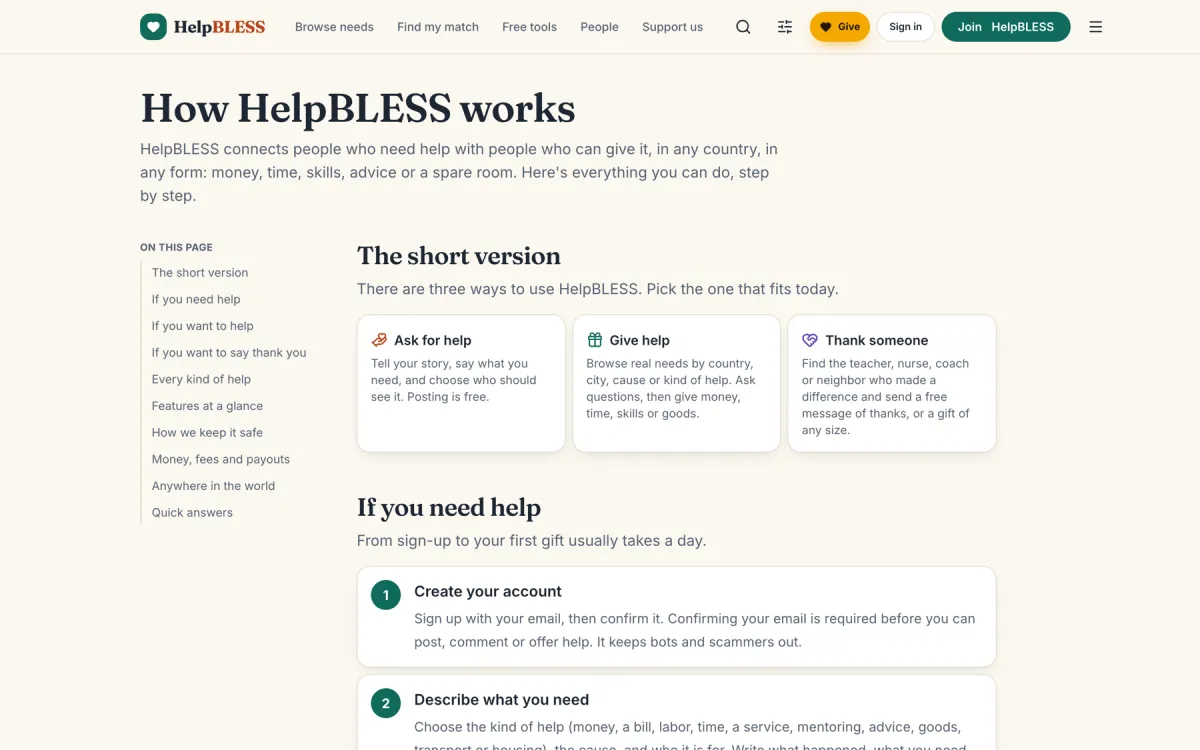
A surprise bill or a late paycheck can happen to anyone, but asking for help is hard and most fundraising sites are built around big campaigns with targets. People also want to give directly to a person they can see, not into a pool. I built HelpBLESS around those two facts: lower the barrier to asking, and let givers choose a person rather than a pool.
What I built
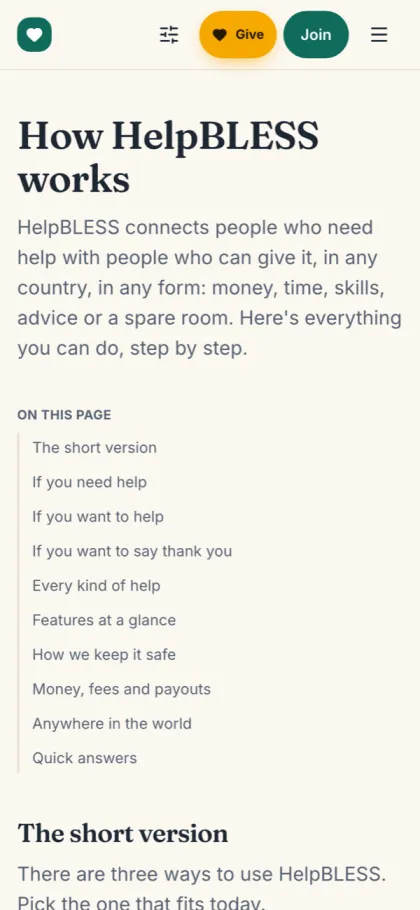
- Every kind of help. Ask for money, time, skills, advice or a spare room, for yourself or for someone else. Posting is free and posts never expire.
- A person reviews every need before it goes live, backed by automated content safety checks.
- Find my match. Three questions point a giver to the needs that fit them, plus a map of needs nearby, bills due soon and current disasters.
- Thank someone. Send a free thank-you or a gift to a teacher, nurse, coach or neighbour.
- Payments through Stripe and PayPal, with receipts, monthly giving and payouts to the person who asked.
- Writing help on the device. An optional "polish my post" button uses the browser's built-in AI model, so a person's story never leaves their computer for that step.
Architecture
The order matters: content safety checks run first, a person reviews next, and only then does a need go live. Givers can reach a need through the matching questions or the map, and both lead to the same page and the same payment options. Updates reach people by email and web push.
Decisions and trade-offs
- Signup source tracking from first touch through to giving, so marketing spend is measured by what it actually brings in.
- Retention that respects people. A clear close-account path with a pause option, spaced reminders and an exit reason, instead of dark patterns.
- Content safety as a shared service across the network's member content sites, with a moderation queue for edge cases.
- Gentle follow-up. An abandoned checkout gets a friendly reminder instead of silence.
- Tests where people get hurt. End to end tests with Playwright for the main journeys, plus unit tests with schema validation on every input.
What it shows about how I lead
On a product where people ask for help with real bills, trust is the product. I put a human in the review path, kept the retention flow honest and moved sensitive writing help onto the person's own device. Where a decision trades revenue against dignity, I choose dignity and measure the result. Tracking where signups come from, through to giving, keeps the growth side honest as well.
Stack
Next.js · TypeScript · Postgres · Stripe and PayPal · Zod validation · Web Push · Chrome built-in AI (Prompt API) · Playwright